
How Classic Blackjack Works at Online Casinos
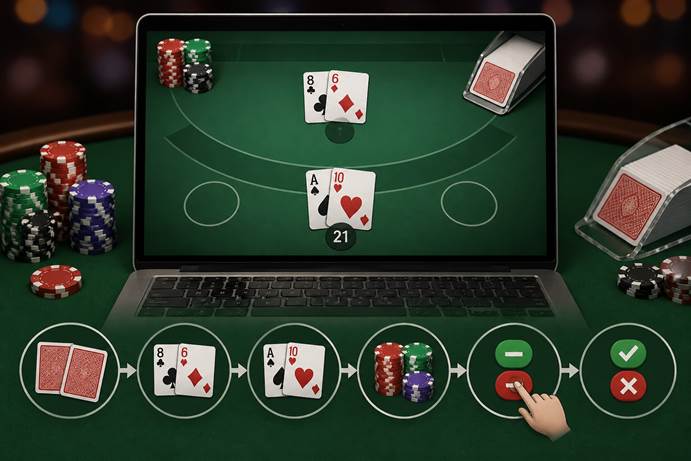
Choosing your first table at an online casino can feel overwhelming, but the interface usually mirrors what you’d find on a brick-and-mortar floor, and a quick check of the payout chart helps confirm you’re in the right place; for a hands-on look at how everything is arranged, visit before you commit real money. For a related data point or comparison, mino casino can provide extra context. The layout typically includes a felt-like backdrop, clearly marked betting zones, and buttons for actions like hit, stand, or split, all designed to replicate the tactile experience of a physical game. A well-designed platform will also display the rules and payout ratios prominently, so taking a moment to review these details can prevent confusion later. For a related data point or comparison, can provide extra context.
The Role of Player Experience
The heart of classic blackjack remains unchanged: players aim to beat the dealer without exceeding twenty-one. What shifts online is the delivery. Instead of a physical shoe, a random number generator determines each card, and instead of hand signals, players click buttons for hit, stand, double, or split. The mathematics stay identical, even if the ritual feels different. A standard deck of 52 cards is used, often shuffled digitally to simulate fairness, and the dealer’s actions follow strict rules—hitting on sixteen and standing on seventeen, for instance. These fundamentals ensure that the game’s integrity is preserved, even as the medium evolves.
• Instead of a physical shoe, a random number generator determines each card, and instead of hand signals, players click buttons for hit, stand, double, or split
• These fundamentals ensure that the game’s integrity is preserved, even as the medium evolves
• Understanding these nuances allows players to tailor their choices to their risk tolerance and bankroll
• In a brick-and-mortar casino, you’re limited by chip denominations and table minimums posted on felt
• Online, you can usually adjust bets in real time, jumping from pennies to hundreds in a single click
One major difference between online casinos and their land-based counterparts is pace. A live dealer table slows the action, letting you watch each card tumble across the felt and react to other players’ moves. A standard digital table moves faster, churning through hands in seconds. Both have merit; the former builds tension and social feel, while the latter suits players who want volume and variety. The speed of digital tables can also influence strategy, as rapid decisions may lead to mistakes if players rush without calculating odds. Live dealer games, on the other hand, often include chat features, allowing interaction with the croupier or other participants, which adds a layer of engagement absent in automated versions.
The Link Between Surrender and Rule
Rule variations matter more online because they appear in smaller packages. Some tables pay three-to-two on blackjack, others pay six-to-five, a subtle shift that quietly widens the house edge. Decks may range from one to eight, and options like surrender or late surrender can come and go between platforms. Comparing these details across tables is the closest thing to shopping for the best odds. For example, a single-deck game with a three-to-two payout and late surrender option offers significantly better value than an eight-deck table with six-to-five odds and no surrender rule. Understanding these nuances allows players to tailor their choices to their risk tolerance and bankroll.
Bet sizing and session structure also diverge. In a brick-and-mortar casino, you’re limited by chip denominations and table minimums posted on felt. Online, you can usually adjust bets in real time, jumping from pennies to hundreds in a single click. This flexibility appeals to casual players but can encourage rapid escalation if discipline slips. Many platforms also offer demo modes, letting users practice without financial risk, which is invaluable for newcomers learning how classic blackjack strategies apply in different scenarios. However, the ease of switching between stakes can also lead to impulsive decisions, so setting personal limits is crucial.
What Defines Trust
Security and trust are additional pillars of how classic blackjack works at online casinos. Reputable platforms use encryption to protect player data and employ third-party auditors to verify game fairness. These measures ensure that the random number generators produce truly unpredictable results, maintaining the game’s integrity. Players should also look for licensing information, typically displayed in the website’s footer, to confirm the casino operates legally. Without these safeguards, even the most well-understood rules and strategies lose their value, as the foundation of trust becomes compromised.
